The Llanelli Tithe Barn
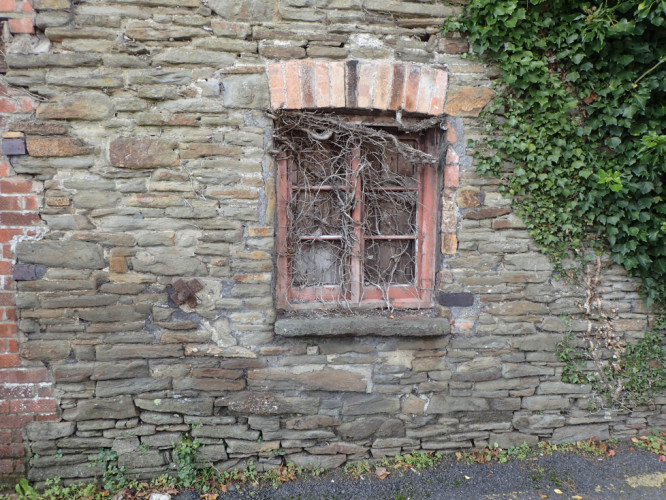
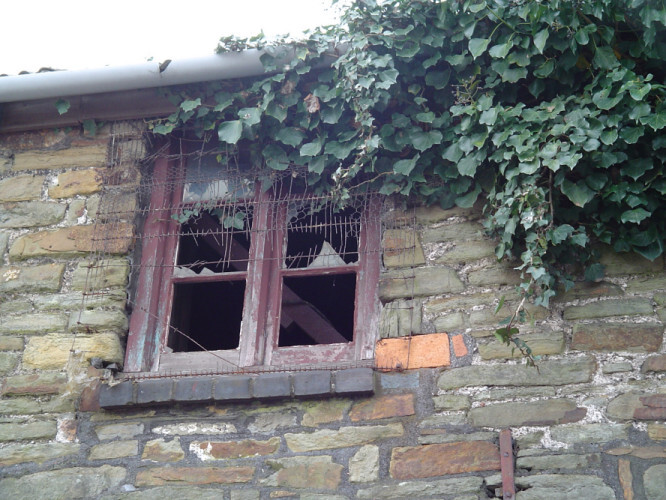
Hidden away behind Thomas Street adjacent to Mark Lane stands a much altered and neglected building linking the town of Llanelli to its far distant past. A plan drawn and published by John Prickett shows the town in 1790 and includes Llanelly House, the Parish Church, Thomas Street and a Tithe Barn. The Tithe Barn is shown situated between two plots of land formerly known as Glas Cwrta Fach and Haggard.[1] Although the building does not possess any architectural merit it is worth recounting its origins and history.
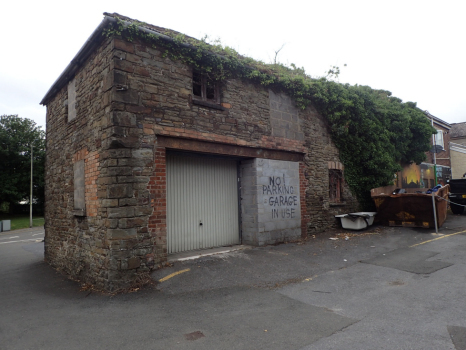
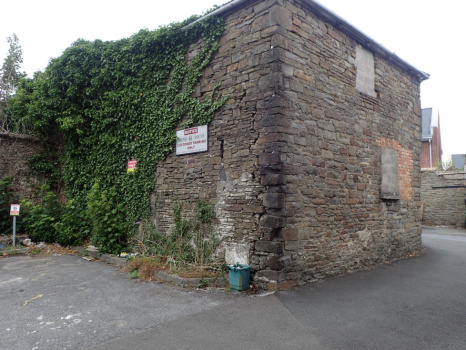
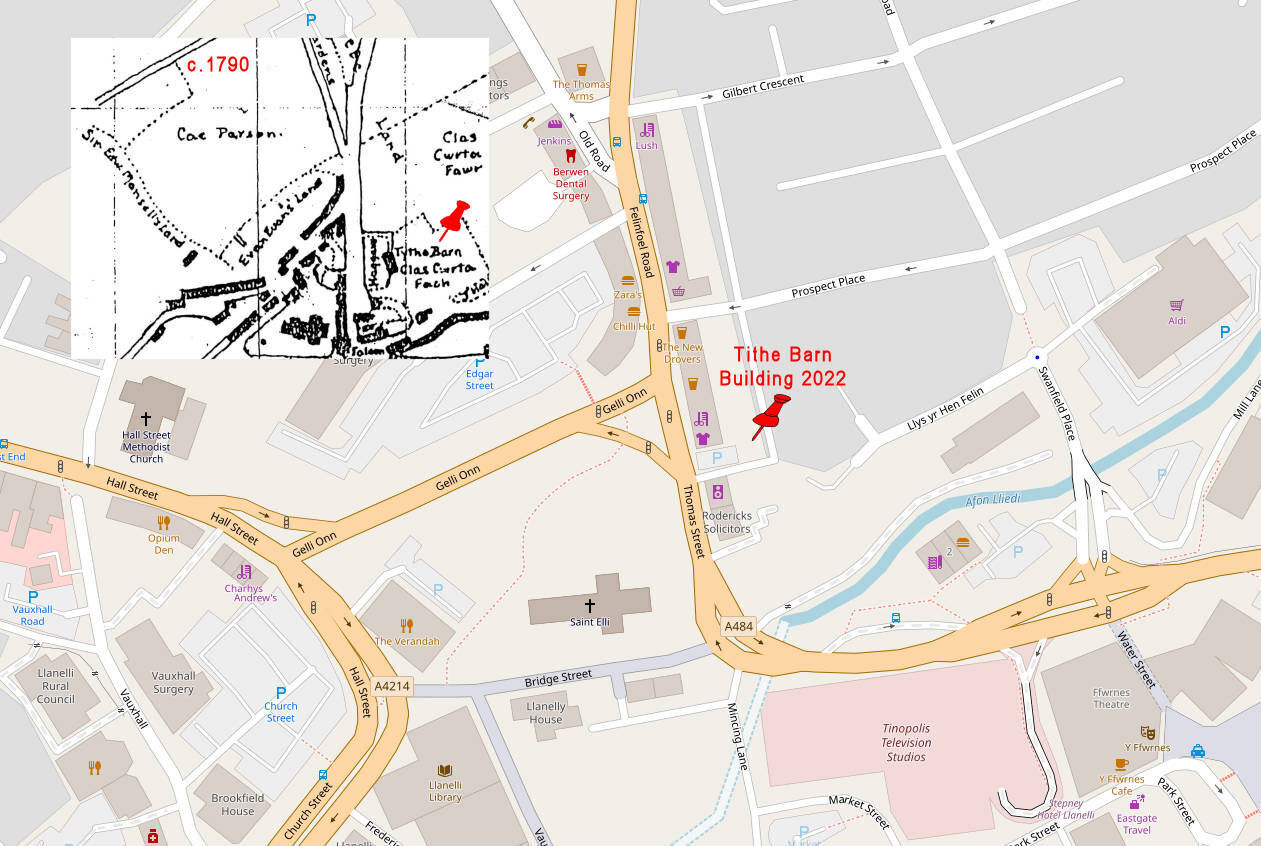
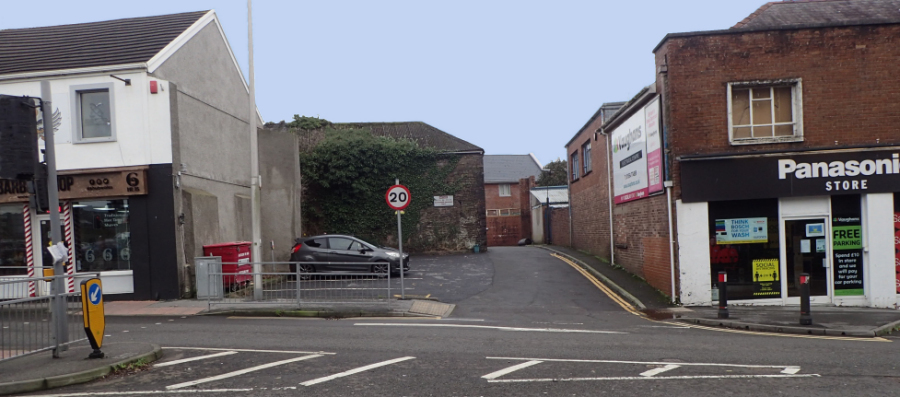
According to the Victorian historian, Arthur Mee, "The tithe barn for receiving the offerings in kind may still be seen to the rear of the premises of Mr. Herbert, in Thomas Street” where the present building stands.[2]
The National Archives give a clear description of what “tithes” meant to the community. "Tithes were originally a tax which required one tenth of all agricultural produce to be paid annually to support the local church and clergy. After the Reformation much land passed from the Church to lay owners who inherited entitlement to receive tithes, along with the land." Thus the tithe barn was a place where agricultural produce was taken to be stored as stipend payment to the Church. [3].
Another Victorian historian, James Lane Bowen said, "The tithes of Llanelly parish first belonged to the Church but were afterwards sold to Mr John Morgans of Granby, and he sold them to Morgan Thomas, J.P., in 1683. The present owner is Rees Goring Thomas Esq., Llanon. In the olden times the tithes were collected, not in money, as is now the case, but in kind. Fifty years ago the tithes yielded about £2,100 per annum. Last year they were about £1,780. An Act of Parliament was passed Aug 23, 1831, which was called “An Act for Extinguishing Tithes, and ensuring customary payments in lieu thereof within the parish of Llanelly, in the county of Carmarthen, and for making compensation in lieu thereof”. Mr J. D. Jones, Newcastle was one of the first agents for receiving tithes; at present the office is held by Mr Wm. Griffiths, Thomas Street".[4]
One important tithe owner not mentioned by Bowen was Henry Child (c 1744-1824) an astute businessman who had come to Llanelly from Pembrokeshire in 1760.[5] At the age of eighteen Henry Child had taken up employment as Sir Thomas Stepney’s agent. He leased the Talbot Head in Parc Eynon and then bought a malt house standing at the top of Wind Street and adjacent to Thomas Street for the manufacture of malt. As an outlet for his malt, he expanded his assets in the area by acquiring the Falcon Inn standing at the bottom of Thomas Street which became the centre of commercial activity in Llanelly. The inn would have received considerable trade especially on market days when the then market was situated in and around the nearby churchyard.
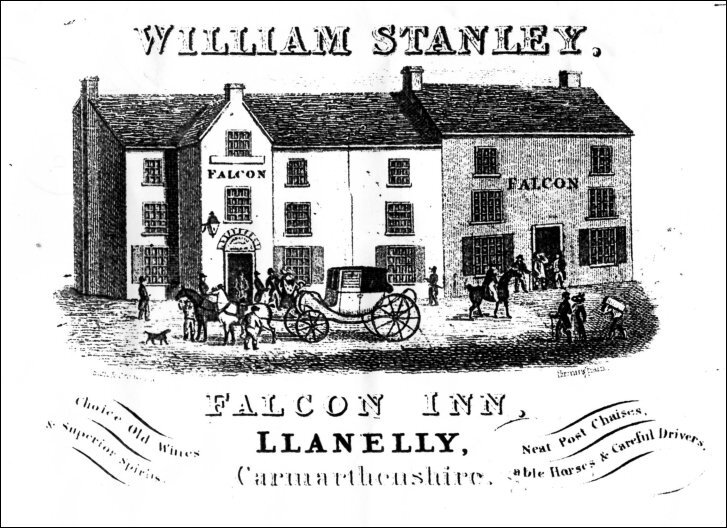
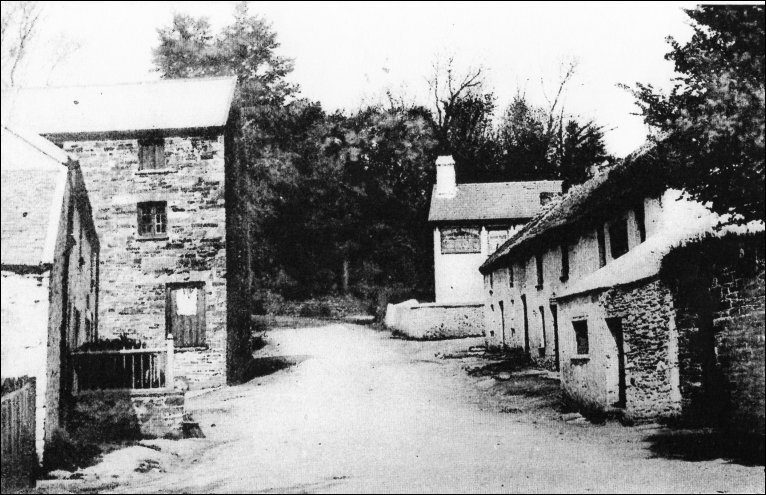
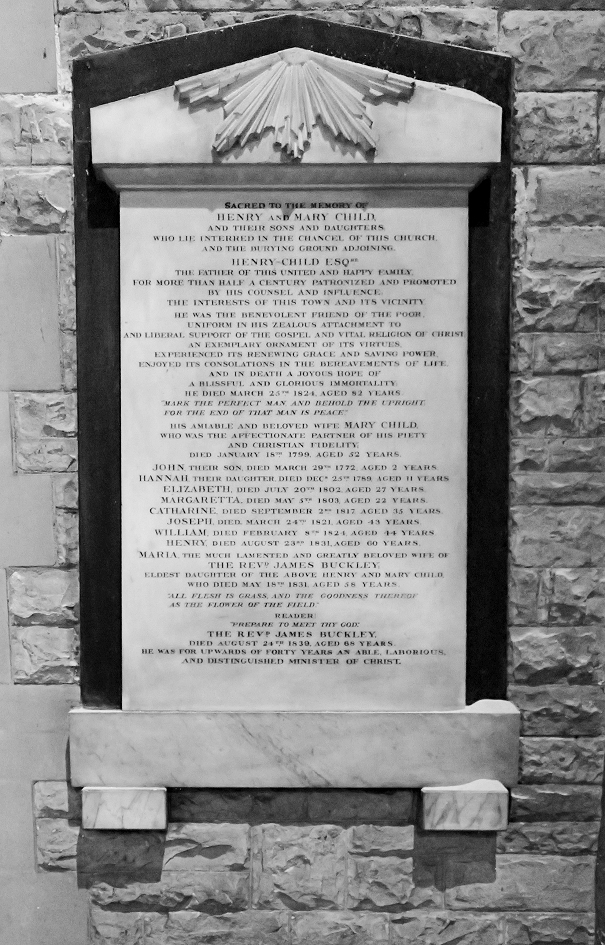

Old plans of Felinfoel show that Henry Child owned the land opposite the Felinfoel Mill and probably built the present White Lion Inn on it. With his empire expanding, he leased the Llanelly Mill and the north east part of the Carmarthenshire Dock for the export of his surplus grain and flour. One of Henry Child’s duties was to supervise the perambulations of manorial boundaries, “beating the bounds”, and the perambulators always returned to the Falcon Inn. Here he received rents, and then issued bills to the Vaughans and Stepneys for the meals and beer they provided for their rent-paying tenants. His business acumen may have prompted him to purchase and hold the tithes of Llanelly from 1790 to 1811.[6]
According to Arthur Mee, Henry Child was the owner of Felinfoel Mill, Tanygraig Tremorfabach, Pantygwenith and other property. He built the malthouse near the present brewery and the founder of that portion of this present extensive concern. He leased or rented the tithes of the Llanelly parish, and the tithe barn for receiving the offerings in kind may still be seen to the rear of the premises of Mr Herbert, in Thomas Street.[7]
When Henry Child died his business devolved to his daughter Maria and her husband Revd. James Buckley and so the ‘foundations’ of Buckley’s Brewery were laid. As Henry Child lived in Llanelly for over sixty years and held the tithes for twenty-one of them, it is safe to assume that the tithe barn in Thomas Street was used by him.
By1811 the tithes of the town were owned by the Llannon landowner, Rees Goring Thomas Esq. (1769-1821) and subsequently his son of the same name. An example of the tithes paid in Llanelly in 1828 are shown below.[8]
The following is an account of all the Titheable matters, and the moduser in respect to them, due and payable to the Tithe owner or Proprietor of the Tithes of the Parish of LlaneIly, in the County of Carmarthen, February 1st, 1826.
CORN.—One-tenth part of all the wheat, barley, and oats, to be thrown out of the Field-mow at the time of leading the corn home. The farmer, or owner of the corn, being under the custom in this Parish obliged to harvest and tie up all the corn in sheaves and make it up in Field-mows.
HAY.—One penny for each farm in lieu of Tithe-hay at St. James's Tide yearly, in every hamlet in this Parish (with certain exceptions as described).
COWS.—By the custom of this Parish two-pence only is paid for each milch cow, in lieu of Tithe-milk ; but one penny only for the first calf a cow brings.
STEERS AND HEIFERS.—One half-penny only is paid for each of them when a year old, and nothing for calves under a year old.
COLTS.—One half-penny for each colt, payable at St. James's Tide. Frunt—One penny for each filly, payable at St. James's Tide.
HORSES AND MARES. —By the custom of this Parish there is nothing due or payable for the agistment of horses or mares, after the first payment when a colt or filly.
POTATOES.—They are free from Tithe by the custom of this Parish.
TURNIP.—The tenth heap is payable or rendered for the Tithes.
PEASE—The like.
BEES.—Four-pence yearly at St. James's Tide is pay-able in lieu of all the bees kept at each house or garden in this Parish.
MARRIAGES.—Three-pence is payable by way of Easter Offerings, yearly, as long as both husband and wife live, but one half by the Survivor.
LAMBS.—For every lamb from on to six, two-pence each ; and if more than six lambs one is rendered for Tithe, the farmer receiving two-pence for every other lamb short of ten, and so on, for a greater number, pay-able at St. James's Tide.
WOOL.—The tenth part is rendered for Tithe by weight.
GEESE.—If there are two young geese, one is rendered at St. James's Tide for Tithe ; if there are more ganders than one kept, one young goose for each gander is due where there be more than one young goose.
PIGS.—One young pig out of every litter is payable for the Tithe of the young pigs.——— ———
The following is an account of the Titheable matters modus or custom of the Parish of Llangendeirne, belonging to Rees Goring Thomas, Esq., January, 1828.
GREAT TITHES.
One-tenth of wheat, barley, oats, pease, or Beans , or compounded for.
Hay .—A modus of one penny for every farm in lieu of hay Tithes.——— ———
SMALL TITHES.
For every milch cow.—2d.
For every heifer first calving.—14d.
for every yearling calf.—1½d. Nothing is payable if it exceeds one year old, one lamb out of every ten.
For every lamb one to six.—2d each. If more than six the Impropriator has a right to one lamb by paying 2d. for every Iamb short of ten. The lambs to be gathered at midsummer or compounded for.
For every fleece of wool.—2d, or the tenth weight.
For every yearling colt.—1d.
For every yearling filly.—½d.
One pig out of every litter, if more than one or compounded for.
One goose if more than one and gathered at Michaelmas.
For every marriage.—4d.
For bees kept in each house or garden.—4d.
For every working shoemaker.—4d.
The National Archives record that:
By the early nineteenth century the tithe payment ‘in kind’ seemed an out-of-date practice, and became very unpopular, against the background of industrialisation, religious dissent and agricultural depression. The 1836 Tithe Commutation Act required tithes in kind to be converted to more convenient monetary payments called tithe rentcharge. The Tithe Survey was established to find out which areas were subject to tithes, who owned them, how much was payable and to whom.[3]
During the Rebecca Riots the tithes were another grievance to be added to the protests against the tollgates . The tithes taken in Llanelly were considered to be exceedingly high particularly when held by Rees Goring Thomas, while, his agent, John Edwards, the man collecting them, was exceedingly harsh.[9] About that time (exact date unknown), local farmers held a meeting at the White Lion Inn at Felinfoel. They agreed to revert back to the method of payment in kind. As a protest, they sometimes sabotaged the offerings used as payment, an example of which was to put a snail into the milk churns that were submitted as ‘kind’, [10]. John Edwards faced a more severe protest when in 1843 Rebecca and Her Daughters attacked his house, Gellywernen, near Llannon, threatening his life and destroying much of his property.[11] Llanelly Justice of the Peace, William Chambers, wrote a letter to Rees Goring Thomas criticising Edwards’ conduct and severity as likely “to set the country aflame”.[12]
In the latter years of the nineteenth century local arrangements were substituted for tithes.[3] Local Trade Directories indicate that William Griffiths of Falcon Chambers, Thomas Street, was the agent for the Gellywernen Estate in the later nineteenth and early twentieth centuries.
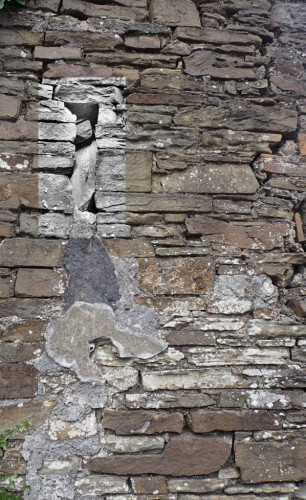
By 1853 the tithe barn appears to have been converted into three separate compartments by partition walls, as can be seen in a town plan from that date. More recently the building appears to have been used as a place for storage and as a garage.
Although the building may not possess any architectural merit, like Llanelly House the Tithe Barn it is one of the few eighteenth century structures remaining extant. Many old buildings in the town are being demolished to make way for new structures without any thought of the past. The Tithe Barn is facing uncertain times and is currently (2022) due for demolition and redevelopment.
Notes and Citations
[1] Collins English Dictionary p. 684 Haggard (in Ireland and the Isle of Man) an enclosure beside a farmhouse in which crops are stored
[2] History of Llanelly Parish Church (1888) Arthur Mee p.105
1897 Llanelly Directory (Davies & Co) p.119 Davies, 12 Thomas Street. D. Herbert, Manchester House, draper.
[3] The National Archives Help with research - tithes
[4]The History of Llanelly (1886) James Lane Bowen p.32
[5] Old Llanelly John Innes (1902) p.142 [6] Castell Gorfod 104 (29 June 1810) The Carmarthenshire Antiquary Vol VI 1970. p10 etc. Coal Mining in the Llanelli Area . M. V. Symons (1979) Vol 1 p285. [7] ibid Arthur Mee (1888).
[8]“Tithes” The South Wales Press 29 May 1884
[9] Cambrian 20 May 1837 p.3 c.2 Report of the Commissioners of Inquiry for South Wales 1844 Evidence of Mary Thomas 6 September 1843 p.360
[10] The Carmarthenshire Antiquarian 1986 XXII P83
[11] The Welshman 1 September 1843 p.2
[12] The Carmarthenshire Antiquary Vol 1. 1941-1944. p.31 A File of Rebecca Papers
LCH0383